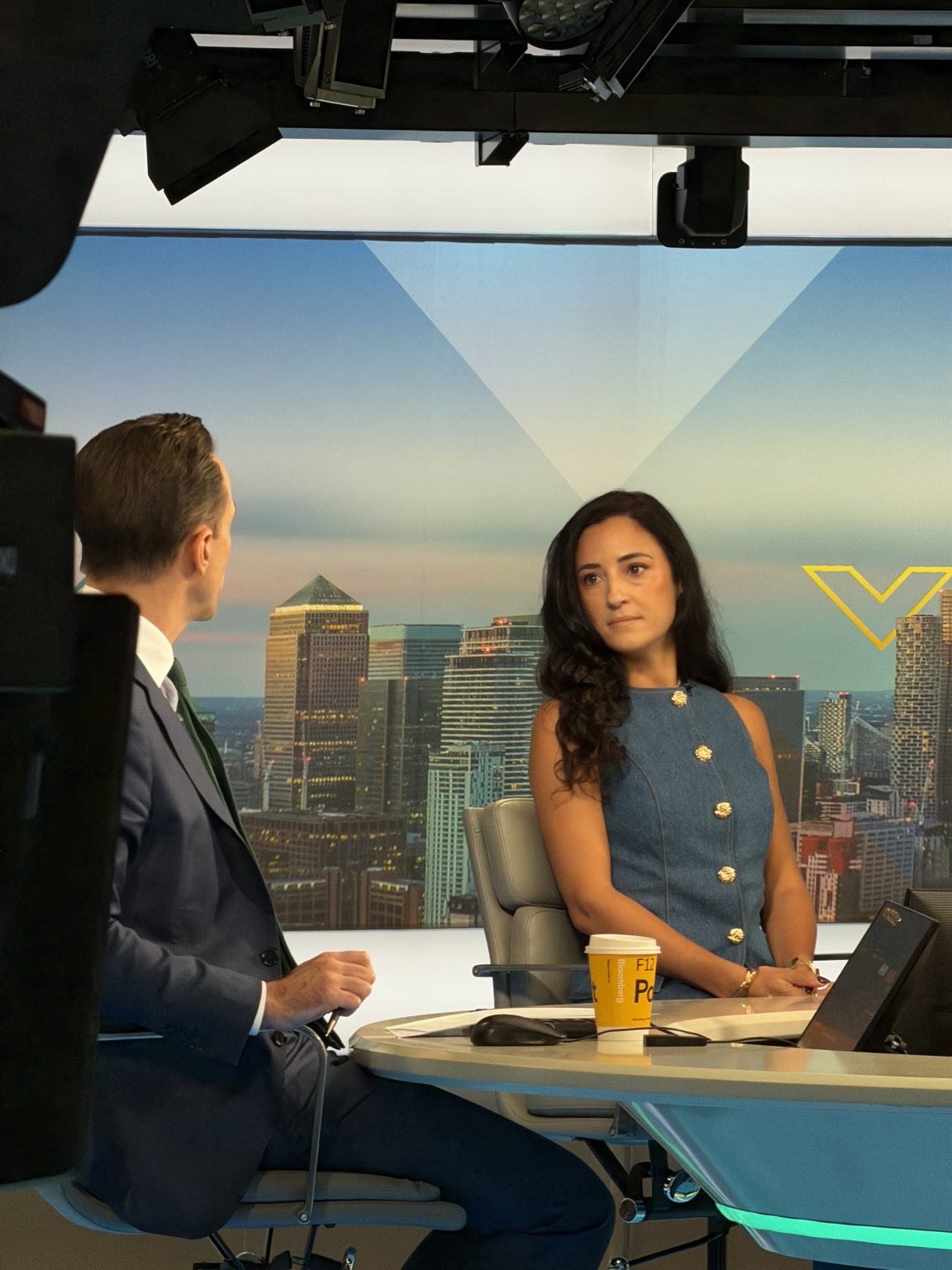
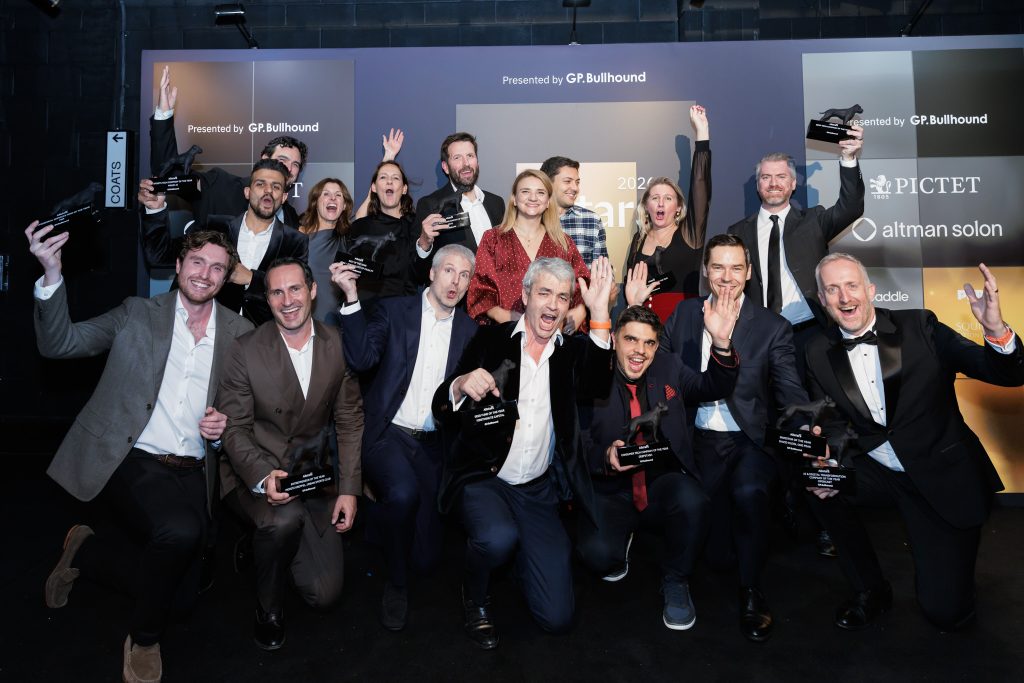
The 2026 Allstars winners were crowned in London last Thursday, 15 October. On the same day, Jade Williams, Director, Business Development at GP Bullhound, joined Bloomberg to discuss what this year’s shortlist says about European tech. Here is what stood out.
For 24 years, Allstars has recognised Europe’s best founders and the investors backing them. The shortlist is also a dataset. Hundreds of companies, funds and exits that show where capital is going, and why.
This year the picture is clear. Capital is back, it is concentrated in the strongest companies, and deep tech and sports tech are where Europe is building global leaders.
The money is going to the best, not to everyone
European startup funding reached $25bn in Q3 2026, up from $14bn a year earlier. That is Europe’s strongest quarter in four years.
But it is not spread evenly. Most of it sits in a small number of large rounds, backing companies that can prove their economics.
Exits are happening, and the buyers are global
The shortlist covers more than 90 exits, including Faculty, Cognigy, and Runna. Most went to strategic buyers, and half of those buyers came from outside Europe. Global acquirers paying for European assets is the clearest proof of their quality.
Seed is returning cash and the journey is shorter. AI companies like Lovable and Harmattan are reaching unicorn status in about two years, whereas it used to take five or more on average for traditional software companies.
That success is being recycled. Several funds now count more than 100 unicorn founders among their LPs.
Deep tech: where Europe has the edge
Quantum, photonics, defence and robotics draw directly on Europe’s research and engineering base. They also draw the biggest rounds. Hardware, compute and frontier models are capital-intensive, and the winner-takes-most pattern we flagged last year has intensified.
Four shortlisted names show the range:
- OQC deploys quantum computers in commercial data centres. Its £260m round, with participation from the British Business Bank, shows private and public capital working together to help a European company scale internationally.
- Paragraf (Cambridge) has cracked graphene electronics at scale, using standard semiconductor equipment.
- Phasecraft (Bristol) is building quantum algorithms, working out what the first useful quantum computation will be, and how soon.
- Optalysys makes photonic chips that move and process data with light.
Sports tech’s standout year
Sports tech is one of the strongest categories on this year’s shortlist.
- Magic AI has built an AI personal-trainer mirror that checks your form as you exercise. Over half a million coached workouts give it a dataset competitors will struggle to match.
- MatchWornShirt gives match-worn shirts a digital passport and authentication record.
- WeWard rewards people for walking, with points that convert into cash, gifts or charity donations. WeWard now has over 30 million users globally, with strong growth in the US.
What the winners have in common
The same traits come up again and again:
- Proprietary data or IP
- Real revenue and defensible unit economics
- Workflows customers depend on
- An early US go-to-market
- Strong growth
Investors need a clear reason a business will stay valuable as technology changes. Something hard to replicate, customers who need it, and evidence the economics work.
Prolific, last year’s Allstars winner, is the case in point. The London-based company is the human intelligence layer for AI, with Google and Hugging Face among its customers.
This year’s Company Challenge winner, tem, fits the same pattern. Called the Stripe for Energy, it has reinvented how energy is bought and sold.
The questions Europe still has to answer
Can Europe finance the ambition? The gap is still significant. Seventy per cent of growth capital comes from outside Europe. Companies like Mistral, ElevenLabs and Isomorphic Labs are chasing huge markets, which pushes up valuations and round sizes. Government money helps, but European pension funds need to back European growth funds. The intent is there. The cheques need to follow.
Is the IPO window open? The question is where they list. Nscale, a London AI infrastructure company, has just filed to list on the New York Stock Exchange. European exchanges may prove more receptive to deep tech than to software: Europe’s public markets have long rewarded hardware champions like ASML over consumer software names like Deliveroo. In the meantime, acquisitions and secondaries are doing the heavy lifting on returns.
Congratulations to this year’s winners
Thank you to every shortlisted founder, company and investor, and to our judges and sponsors. Explore the full shortlist and winners: https://www.allstars-awards.com/
Related Articles