The floor told a clearer story than the panels
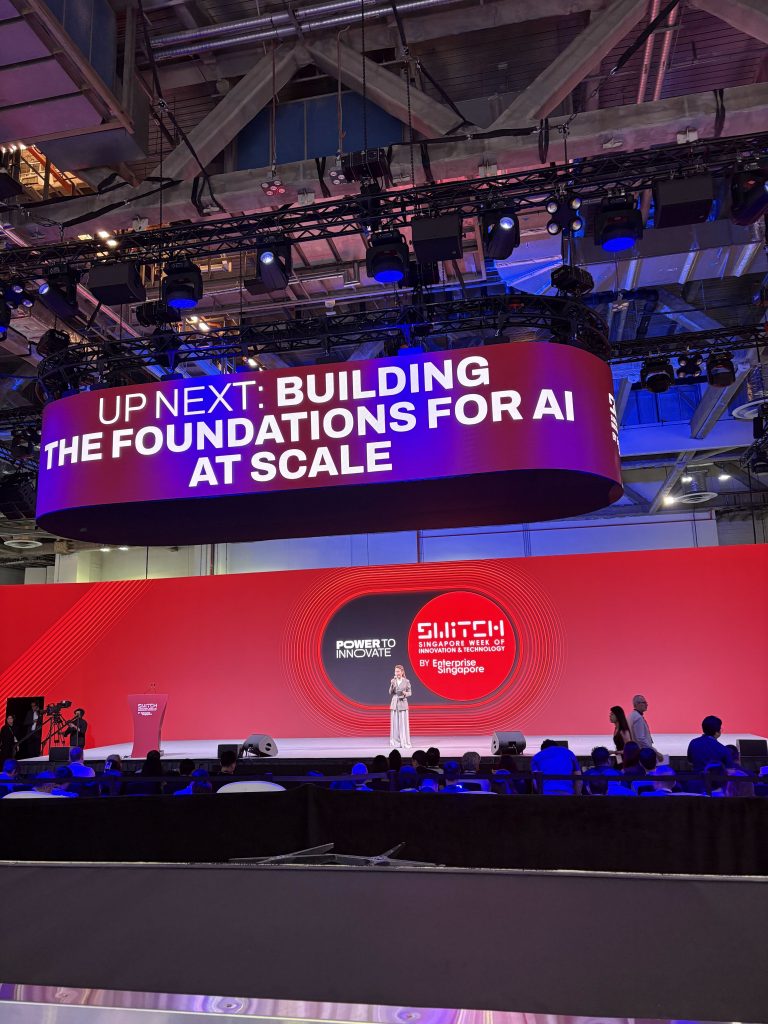
Walking the trade floor at SWITCH in Singapore this week, one thing registered quickly. A large share of the booths were quantum and photonics, and not just AI software sitting on top of someone else’s hardware. Actual hardware.
That was not an accident, and it was not a trade show quirk. It is the visible end of a decade of deliberate state capital allocation, and it changes how investors should read this market.
SWITCH has grown into one of Asia’s largest deep tech gatherings. The 2025 edition drew more than 25,000 attendees and 400 exhibitors from over 100 markets. This year’s edition ran from 27 to 29 October at Sands Expo.
Quantum: an early and deliberate bet
In December, Singapore committed S$37bn to the Research, Innovation and Enterprise 2030 plan, launched by Senior Minister Lee Hsien Loong as chair of the RIE Council. It is a 32% increase on the S$28bn that preceded it, and it runs at roughly 1% of GDP, a level Singapore has held for close to two decades.
That consistency is the point. Founders here are not pricing in a funding cycle. They are pricing in a policy that has not moved in twenty years.
In February’s Budget, Prime Minister Lawrence Wong called quantum an early and deliberate bet. The record supports it. The National University of Singapore set up its Centre for Quantum Technologies in 2007, when most of the field was still theoretical.
That patience is now converting. Singapore will be the first country outside the United States to host Quantinuum’s Helios system, a trapped-ion machine due to complete installation by the end of this year. Sitting alongside it is a national quantum strategy of close to S$300m and a partnership with Qolab, the superconducting hardware company co-founded by Nobel laureate John Martinis.
The logic is the combination of advanced manufacturing, semiconductors and frontier quantum research in one place. Singapore is not competing on research funding alone. It is competing on the ability to fabricate what the research produces.
Photonics: where the fabs come in
The second bet is photonics, and it is where Singapore’s manufacturing base matters most. As AI clusters grow, moving data between chips is becoming as hard as computing it, and light is increasingly the answer, from optical interconnects to co-packaged optics.
Singapore already makes around one in ten of the world’s chips and a fifth of its chipmaking equipment. This year it committed S$800m to a semiconductor research flagship with silicon photonics and advanced packaging among its core areas. For a photonics startup, that means pilot lines and packaging partners down the road, not on another continent.
The investors we met were clear on this. Singapore is not only writing cheques into quantum and photonics companies. It is giving them the labs, fabs and partners to scale here.
The same logic runs through robotics. At 818 industrial robots per 10,000 manufacturing employees, second only to South Korea and around six times the global average, hardware founders have real production environments to test in rather than only labs.
What we took away
Singapore is often filed as a finance hub. In frontier tech, that reading is out of date.
It is a small market that has chosen its ground carefully and stayed on it: semiconductors and advanced packaging, quantum, photonics. The state is not just writing cheques. It is building the ecosystem around them, giving companies the labs, fabs and partners to scale from here rather than leave.
Korea builds the chips. Japan makes them possible. Singapore is betting on what comes next.
This piece is part of Frontier Notes, GP Bullhound’s series written from the road across Seoul and Singapore. The full write-up goes to the Frontier Tech mailing list shortly.
For more on how this build-out connects to compute, interconnect and power demand, see GP Bullhound’s forthcoming report on AI infrastructure.
Related Articles